Our program is built from our own chess experience as well as the learnings of our past and present students. However, you don't need to be a grandmaster to learn chess basics, and teaching the basics is not our goal.
Rather, we believe the game of chess is a foundation for teaching life skills that kids will apply in many other disciplines – including computer science, math, and even literature.
We build upon the famous idea that chess is a paired down model of life itself – and we use that model to teach your kids how to make decisions that will benefit them outside the board.

There are four major pillars to our curriculum: pure chess play, visualization of complex structures, asking the right questions, and practice.
First and foremost, we're a chess workshop! As such, we teach kids the standard aspects of chess – rules, tactics, problem-solving, developing strategies. We use many techniques to make learning fun – including visualizations, games, logical and creative exercises.
And we believe that dynamic, interactive teaching with a variety of activities offers the most efficient learning environment to help kids thrive and progress at the right speed.
What if your kid could play chess blindfolded – visualize the chess board, make legal moves, and strategize without even seeing the board? It's not just cool – it's much more than that.
Kids who use their mind to manipulate complex structures are at an advantage should they pursue highly competitive fields like computer science, math, or theoretical physics. That's because visualizing chess moves trains the mind to develop complex algorithms. Our experience shows that kids who acquire these visualization skills early are more likely to succeed in technical subjects when they're older.
By far young players' biggest challenge is conquering wishful thinking. When we ask "Why did you make this move?", the answer is often "Because I wanted to." Chess is the perfect game to develop reasoning for your actions beyond the "want" to "here's why I did it".
Another important goal is to change the way kids think about problems and interactions. We systematically introduce questions that kids should ask before they make a move.
For example:
By asking these questions, kids will learn how to analyze a problem and how to consider (and avoid) the worst-case scenario.
A word of caution, though. "Practice makes perfect" still applies! We do our best to give your children the skills that we know; but for better results, kids must still practice between sessions. That's why after each class, our coaches will send out homework with additional instructions and practice problems. Homework is optional, but anyone who wants to progress faster can use this opportunity to gain experience.
The skills we teach are unique. They help kids become better chess players and prepare for academic and professional careers. And they will make your kids intellectually stronger, more confident, and ready to tackle any future challenge.
If you have any questions about our curriculum, please feel free to send us a message – we will be happy to help you understand our program and help you make an informed decision.
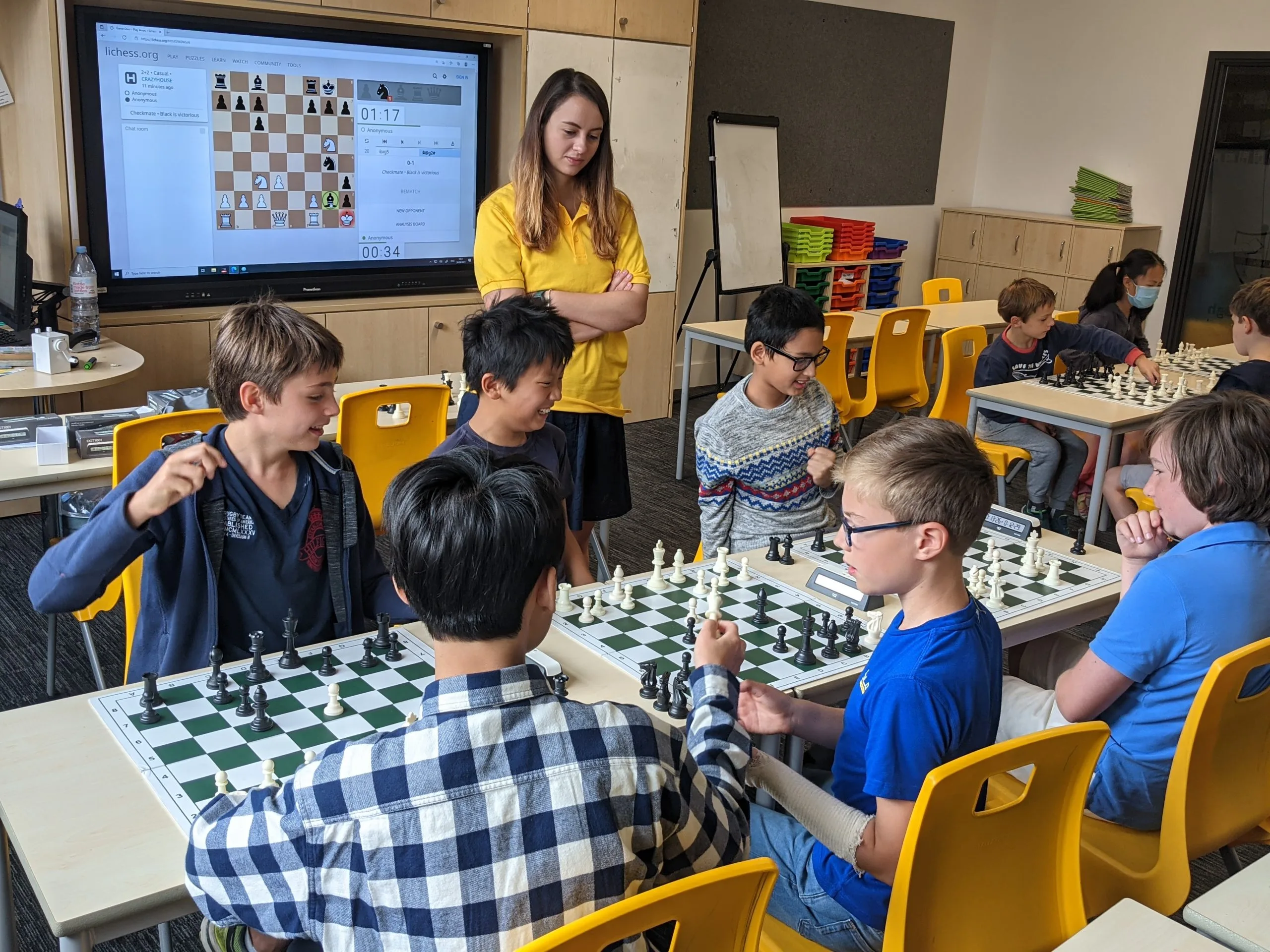
Every class follows a clear structure:
Children immediately apply new ideas through guided games, puzzles, and real matches, making every lesson engaging and memorable.
Our goal isn't just to create stronger chess players.
We help children become confident thinkers, resilient learners, and creative problem-solvers.
Our mission is simple: to help children become confident, curious, and resilient through the game we love most.



We're always looking for passionate coaches and educators to help shape the next generation of young thinkers.